

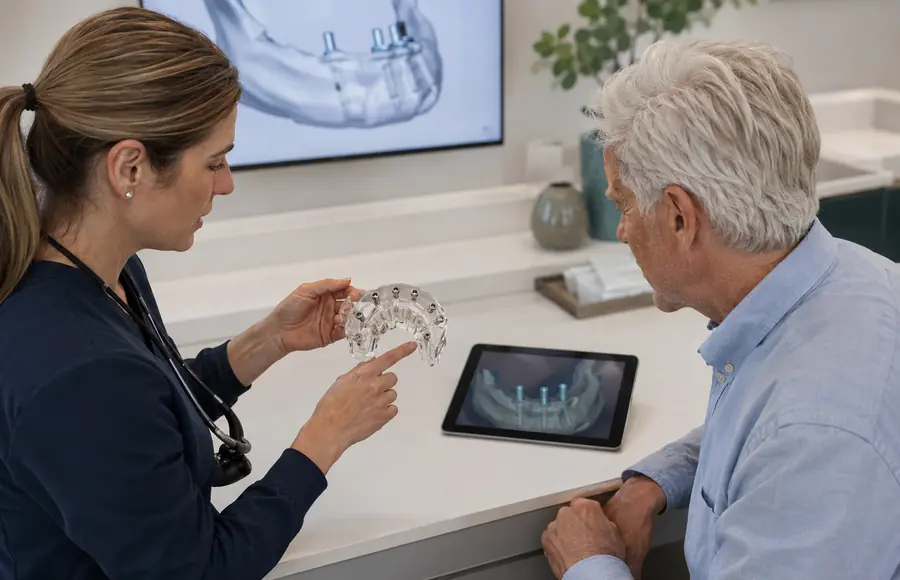
What does All-on-6 mean?
All-on-6 is a full-arch implant approach using six implants in one jaw to support a fixed bridge. The additional implants may allow biting forces to be shared across more supporting points, but a consensus review found no significant difference in implant or prosthesis survival between fewer than five, five, or more than five implants, so six is not automatically better than four. The appropriate number depends on bone, anatomy, bite, bridge design and the clinician's plan.
Assessment and planning
A comprehensive examination is essential. This normally considers the condition of any remaining teeth, gums, jawbone, smile, speech and bite, supported by appropriate imaging. The dentist should also review medical history, medicines, smoking, tooth grinding and the patient's ability to maintain the restoration.
Treatment stages
Treatment may include extractions, implant placement and a temporary bridge, followed by healing and a final bridge. Some patients require bone grafting or a staged approach. Any promise of immediate fixed teeth should be conditional on findings during surgery and adequate implant stability; consensus guidance treats bone grafting or sinus augmentation at the same appointment as a relative contraindication to immediate loading.
Benefits and limitations
Six implants can offer additional support and restorative options in suitable cases. It also means more implant sites, cost and surgical planning. Complications may involve failure of one or more implants, infection, gum or bone inflammation, nerve or sinus involvement, component loosening, bridge fracture and the future replacement of worn restorative materials.
Comparing All-on-4 and All-on-6
Do not compare only the implant count or headline price. Ask clinics to explain why their design suits your anatomy, the evidence behind it, whether the quoted bridge is temporary or final, the materials used, hygiene access, contingency plans and long-term maintenance.
This article provides general educational information. It does not diagnose a dental condition or confirm that a treatment is suitable for you. A dentist must assess your mouth, health and appropriate imaging before giving personalised advice. Treatment methods, timings, risks and inclusions vary between patients and clinics.
Sources and further reading
- International Team for Implantology — Number of Implants Placed for Complete-Arch Fixed Prostheses (opens in a new tab): consensus statement finding no significant difference in implant or prosthesis survival between fewer than five, five and more than five implants, and recommending that treatment planning be guided by the prosthesis and individual factors.
- International Team for Implantology — Loading protocols for fixed prostheses in edentulous jaws (opens in a new tab): consensus statement on immediate, early and conventional loading, including implant stability criteria and bone augmentation as a relative contraindication to immediate loading.
- Guy's and St Thomas' NHS Foundation Trust — Dental implants (opens in a new tab): patient information on what implants are, alternatives, treatment stages, risks and long-term care.