

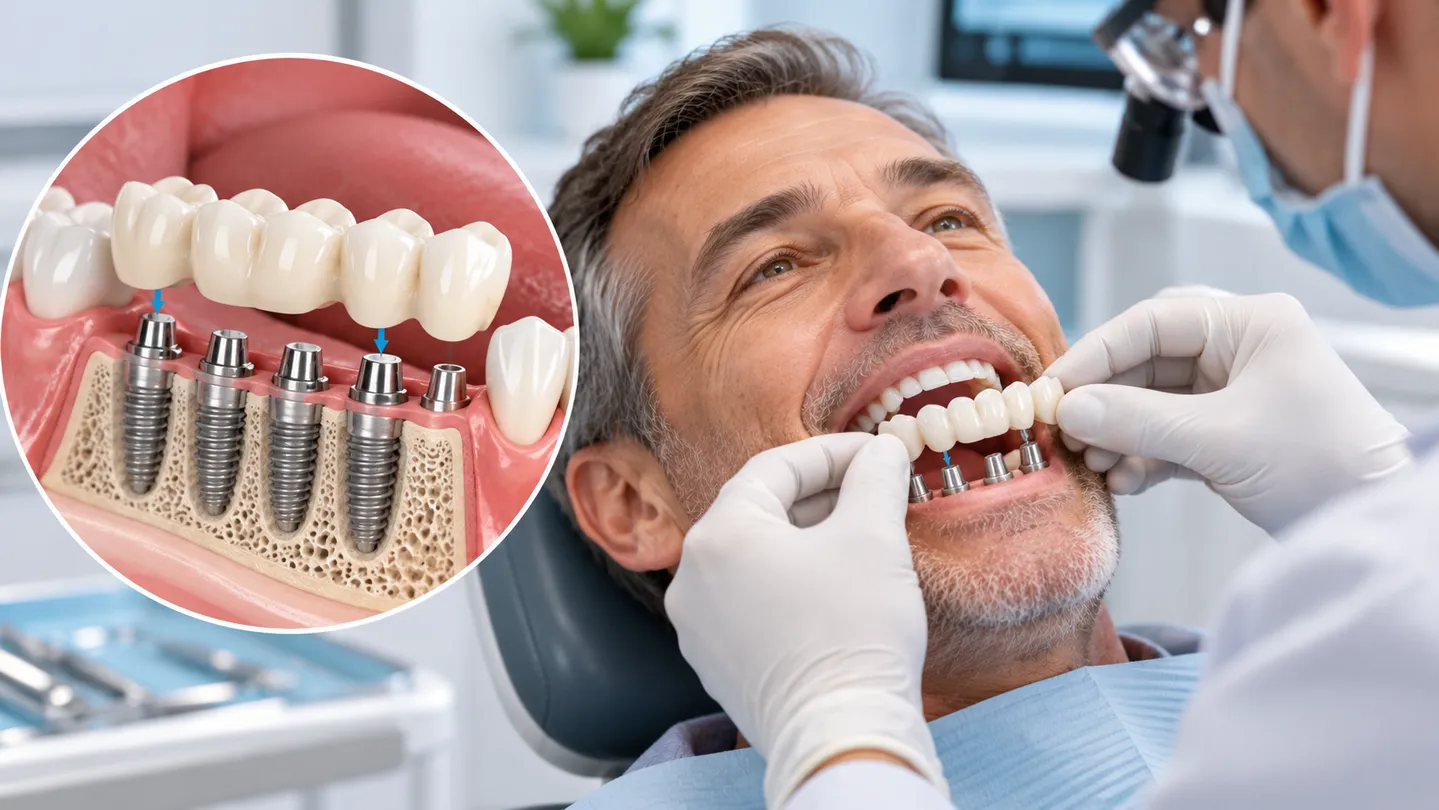
Immediate loading describes a dental implant protocol in which a prosthesis is connected to the implant or implants very soon after placement.
The International Team for Implantology defines immediate loading as loading within one week of implant placement.
This can include the day of surgery.
Does immediate loading mean the implant has already healed?
No.
The implant is still going through biological healing and osseointegration.
Immediate loading means a prosthesis has been connected early. It does not mean the bone has already completed its healing around the implant.
Is immediate loading the same as immediate implant placement?
No.
These terms describe different things.
Immediate implant placement means the implant is placed into a fresh extraction socket as part of the same treatment procedure as tooth removal.
Immediate loading describes when the prosthesis is connected to the implant.
An implant can therefore be placed immediately after extraction without necessarily being immediately loaded, and an implant placed in a healed site can also be immediately loaded if the clinical conditions allow it.
Does immediate loading always mean permanent teeth?
No.
Often the restoration attached soon after surgery is provisional or temporary.
In full-arch treatment, patients may receive a fixed provisional bridge during the healing period and later return for the definitive restoration.
The temporary restoration and the final bridge may use different materials and designs.
Can every implant be immediately loaded?
No.
Immediate loading depends on the clinical situation.
Factors can include:
- primary implant stability
- bone quality and quantity
- number and distribution of implants
- bite forces
- whether substantial grafting was required
- the type of restoration
- patient-related risk factors
The treating clinician decides whether immediate loading is appropriate.
Why might a temporary bridge be designed differently?
During early healing, the clinic may design the provisional restoration to reduce excessive forces on the implants.
This can involve adjustments to the bite, tooth shape or chewing contacts.
The aim is to provide function and appearance while protecting the healing situation.
What is early loading?
Terminology matters.
ITI definitions distinguish:
- Immediate loading: earlier than one week after implant placement
- Early loading: between one week and two months
- Conventional loading: more than two months after placement
Different publications have used slightly different historical definitions, so it is useful to ask a clinic what it means by “immediate”.
Is “same-day teeth” always immediate loading?
The phrase “same-day teeth” is marketing language and can be used differently.
Ask:
- are the teeth fixed or removable?
- are they connected directly to the implants?
- are they in functional bite contact?
- are they temporary or final?
- when will the definitive restoration be fitted?
This tells you more than the phrase alone.
Why does this matter when comparing packages?
Two clinics can both advertise “same-day teeth” while offering different protocols.
One may provide a fixed provisional bridge attached to the implants. Another may use a different temporary solution.
When comparing packages, check exactly what restoration is fitted, when it is fitted, how long it is intended to be used and what is included later.
In simple terms
Immediate loading means connecting a dental prosthesis to newly placed implants within about one week of implant placement.
It does not mean healing is complete, and it is not the same as placing an implant immediately after extracting a tooth.