

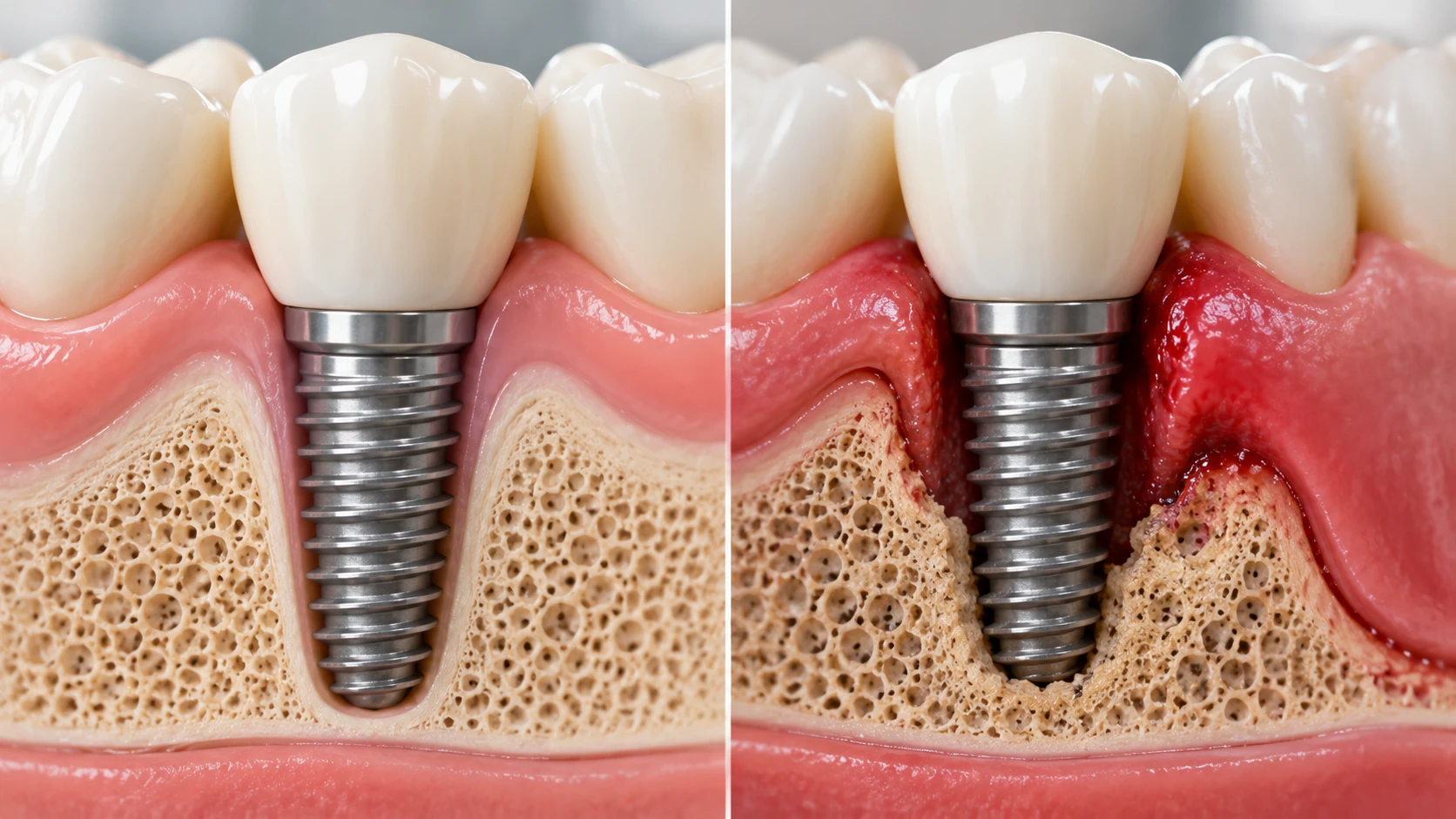
Peri-implantitis is an inflammatory condition affecting the tissues around a dental implant and is associated with loss of the bone supporting that implant.
It is different from ordinary short-term soreness after implant surgery, and it is also different from peri-implant mucositis, where the soft tissue around an implant is inflamed but there is no progressive supporting-bone loss beyond the normal early remodelling expected after treatment.
What is happening around the implant?
A healthy implant is surrounded by gum tissue and supporting bone.
When peri-implantitis develops, inflammation is present around the implant and the supporting bone level changes progressively.
That matters because the long-term stability of an implant depends on adequate support from the surrounding tissues.
Is bleeding around an implant enough to diagnose peri-implantitis?
No.
Bleeding on probing can be a sign of inflammation, but it is not enough on its own to diagnose peri-implantitis.
Clinicians usually assess several findings together, which can include:
- bleeding and/or suppuration on gentle probing
- an increase in probing depth compared with earlier records
- radiographic evidence of bone loss beyond expected initial remodelling
- changes in the soft tissue around the implant
- previous X-rays and measurements where available
This is one reason regular implant reviews are useful: they provide a baseline for comparison.
What is peri-implant mucositis?
Peri-implant mucositis is inflammation of the soft tissue around an implant without the progressive bone loss that characterises peri-implantitis.
It can produce bleeding on probing and other signs of inflammation.
The distinction matters because the conditions are not identical, even though both involve inflammation around an implant.
What symptoms might a patient notice?
Peri-implant disease can sometimes develop with few obvious symptoms, especially in its earlier stages.
Possible signs that should be assessed include:
- bleeding from around an implant
- swelling or redness
- tenderness
- discharge or pus
- a persistent bad taste
- gum recession around the implant
- difficulty keeping the area clean
- a change in the way the restoration feels
- movement of an implant or implant-supported restoration
Movement is not required for peri-implantitis to be present, and an implant can have disease around it before a patient notices anything unusual.
What increases the risk?
Peri-implant disease is influenced by several factors.
Important issues may include:
- plaque accumulation and inadequate cleaning
- a previous history of periodontitis
- smoking
- poorly controlled diabetes or other medical factors
- restoration designs that are difficult to clean
- irregular professional maintenance
- excess cement or other local factors around the restoration
Risk is individual. Having one risk factor does not mean peri-implantitis will definitely develop.
Can a full-arch bridge hide problems?
It can make home cleaning and visual inspection more complicated.
A fixed full-arch bridge may cover the implant connections and create spaces that require specific cleaning techniques.
This is why patients should understand how to clean beneath and around their bridge and how often the treating team recommends professional review.
A bridge looking intact from the outside does not prove the tissues underneath are healthy.
How is peri-implantitis diagnosed?
Diagnosis belongs to a dental professional.
Assessment can involve:
- inspection of the gum tissue
- gentle probing around implants
- comparison with previous measurements
- dental X-rays to assess bone levels
- checking the bridge, crown or prosthetic design
- checking whether the area can be cleaned effectively
A single photograph or home observation cannot establish the diagnosis.
Can peri-implantitis be treated?
Yes, treatment is possible, but the appropriate approach depends on the extent of disease and the individual implant situation.
Management may include professional cleaning and measures to control the bacterial biofilm, correction of contributing factors, and in some cases surgical treatment.
Some implants with advanced or recurrent disease may ultimately need to be removed.
The earlier a change is identified, the more information the treating clinician has when deciding what to do next.
Why are maintenance visits important?
Implants are not maintenance-free.
Regular professional review can help the dental team monitor:
- gum health
- bleeding or inflammation
- cleaning effectiveness
- probing measurements where appropriate
- bone levels when imaging is clinically justified
- screws, bridge components and other technical issues
The maintenance schedule should be personalised to the patient.
What should overseas implant patients ask before travelling?
If you are considering implant treatment abroad, ask the clinic:
- what long-term implant maintenance it recommends
- who checks the implants once you return home
- what records and X-rays you will receive
- what happens if inflammation or bone loss is later detected
- whether a local dentist can access the implant system and components used
- how urgent problems are handled after you leave the country
A guarantee is not a substitute for an aftercare and maintenance plan.
In simple terms
Peri-implantitis means inflammation around a dental implant together with progressive loss of supporting bone.
It is diagnosed by a dental professional using clinical findings and, where appropriate, radiographs — not from bleeding alone.