

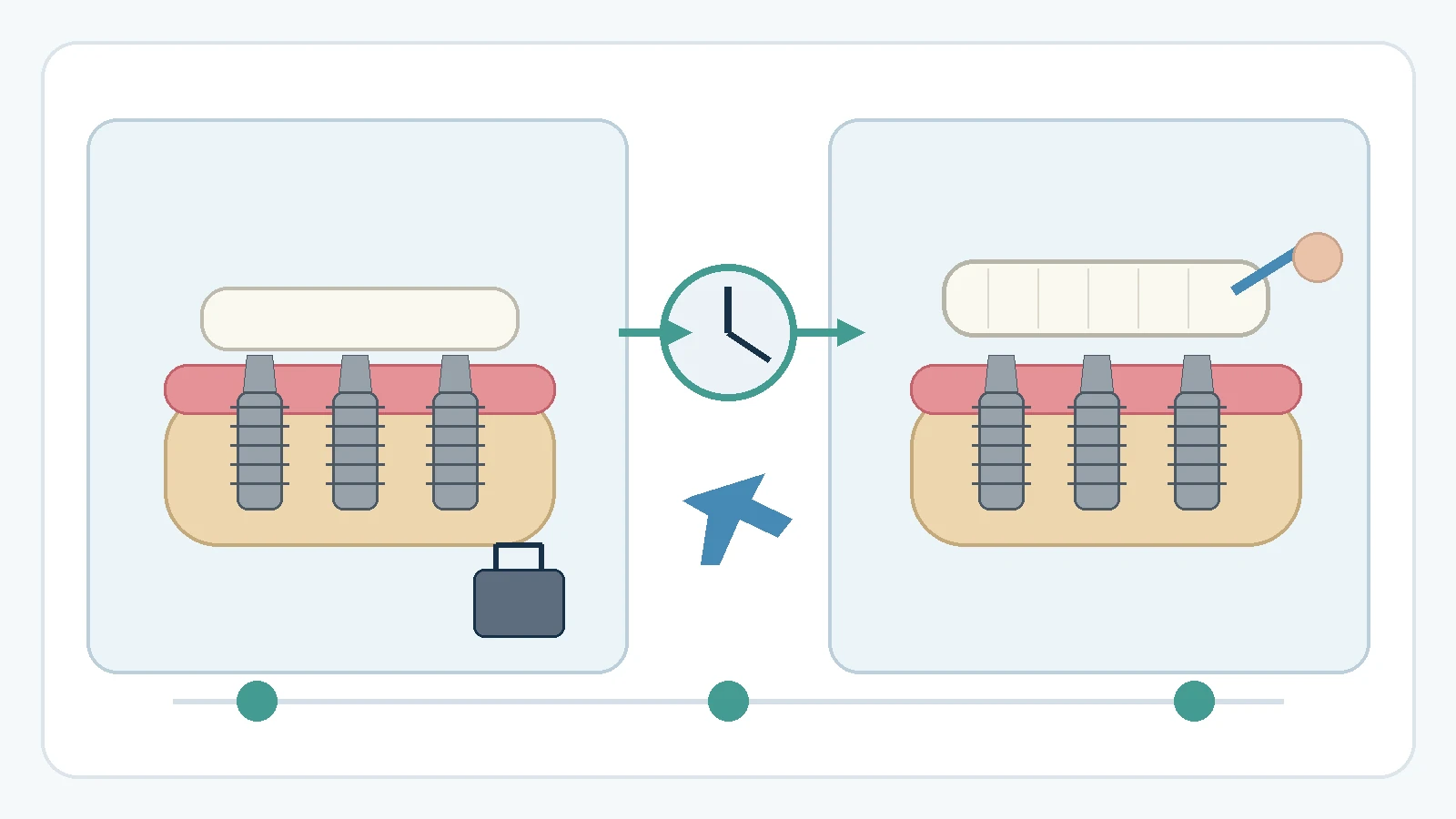
Some implant treatment pathways involve two main trips: an initial visit for diagnosis, surgery and a temporary restoration, followed by a later visit after healing for the definitive teeth.
That is a common pattern in full-arch treatment, but it is not a rule for every patient.
Your actual number of visits and timing should come from the treating clinician and the way your implants heal.
Why might treatment be split across two trips?
Dental implants need biological healing.
After placement, bone gradually forms a stable connection with the implant surface — a process known as osseointegration.
A clinic may therefore use the first visit for surgery and a provisional restoration, then wait for healing before making or fitting the definitive bridge.
What may happen on the first visit?
Depending on the case, the first trip can include:
- clinical examination
- updated OPG or CBCT
- confirmation or change of the remote treatment plan
- extractions
- bone grafting or sinus procedures
- implant placement
- abutments or multi-unit components
- temporary fixed or removable teeth
- bite adjustment
- post-operative review
Not every patient needs all of these steps.
The plan can still change after you arrive
A remote quote may be based on photographs, old X-rays or records.
The dentist may change the plan after:
- examining the mouth
- reviewing current imaging
- assessing bone
- discovering infection
- deciding whether teeth can be retained
- checking implant stability
Allow enough time to understand any revised plan before proceeding.
What will you wear between visits?
Ask this before travelling.
Temporary teeth may be:
- fixed to implants
- removable
- adapted from an existing denture
- made from PMMA or another provisional material
Ask how long they are intended to last and what happens if they fracture or need adjustment while you are back home.
What happens during the healing interval?
The healing interval can vary substantially.
During this period you may need to:
- follow diet instructions
- maintain careful oral hygiene
- attend local checks
- send photographs to the treating clinic
- report pain, swelling, movement or other concerns
- use a night guard if prescribed
- avoid habits the clinician says may affect healing
Do not assume that “nothing happens” between trips.
How long is the interval?
There is no universal number of weeks or months.
Timing depends on factors including:
- implant stability
- bone quality
- grafting
- implant position
- health factors
- the restoration design
- healing progress
Book the second trip around clinical readiness, not simply the cheapest flight date.
What may happen on the second visit?
The later visit may include:
- examination of healing
- removal or adjustment of the provisional bridge
- digital scans or impressions
- bite records
- aesthetic records
- prototype or try-in stages
- adjustments
- final bridge manufacture
- final fitting
- hygiene and maintenance instructions
The definitive bridge may not be ready on the first day of the second trip.
Ask how many clinic days the second visit needs
A package saying “second visit: 5 days” should still explain what happens during those days.
Ask:
- when scanning takes place
- whether there are try-ins
- how many laboratory stages are expected
- whether weekends affect laboratory work
- what happens if another adjustment is required
- whether you should leave spare time before your return flight
Do not make travel dates too rigid
Clinical and laboratory work can change.
Useful flexibility includes:
- refundable or changeable flights where practical
- avoiding a return flight immediately after the final appointment
- allowing time for a final check
- having enough medication
- understanding hotel-extension costs
The purpose is not to expect problems, but to avoid a travel booking controlling a clinical decision.
What records should you take home after the first visit?
Ask for:
- updated treatment plan
- implant system and component details
- implant positions and sizes where recorded
- relevant X-rays
- medication instructions
- temporary-restoration instructions
- emergency contacts
- planned second-visit timing
These are useful if you need help at home.
What should be confirmed before booking the second trip?
Ask the clinic:
- whether healing has been reviewed
- whether new imaging is required
- exactly what work is planned
- expected number of clinic days
- whether the final material/design is confirmed
- what balance remains to pay
- what happens if the definitive bridge cannot be completed during that visit
What if healing is not ready?
The second stage may need to be postponed.
That can be frustrating, particularly when flights and hotels are involved, but proceeding only because travel has already been booked is not a sound reason to ignore clinical readiness.
Ask the clinic how it handles this possibility before the first trip.
In simple terms
For a two-visit implant journey, think of it as:
Visit 1: diagnose → operate → provide temporary teeth
Healing period: protect → clean → monitor
Visit 2: reassess → record → try in → fit final teeth
The dates should follow the treatment, not the other way around.