

Turkey is one of the countries frequently considered by UK and European patients looking at private dental treatment abroad.
That can make it easy to focus on package prices, flights and hotel offers before asking the more important questions: Who is treating me? What treatment am I actually having? What is included? What happens when I go home?
This guide is designed to help you plan the clinical and practical sides separately.
Start with the dentist, not the package
Before comparing hotel nights or airport transfers, find out who is responsible for your treatment.
Ask for:
- the treating dentist's full name
- professional qualifications
- the professional body or registration system that applies in Turkey
- who will perform implant surgery, if relevant
- who will design and fit the final restoration
- whether the same dentist is expected to see you on later visits
The General Dental Council advises patients considering treatment abroad to establish who will provide the treatment, what qualifications they hold, how the provider is regulated, and what aftercare and complaints arrangements exist.
A remote quote is still a starting point
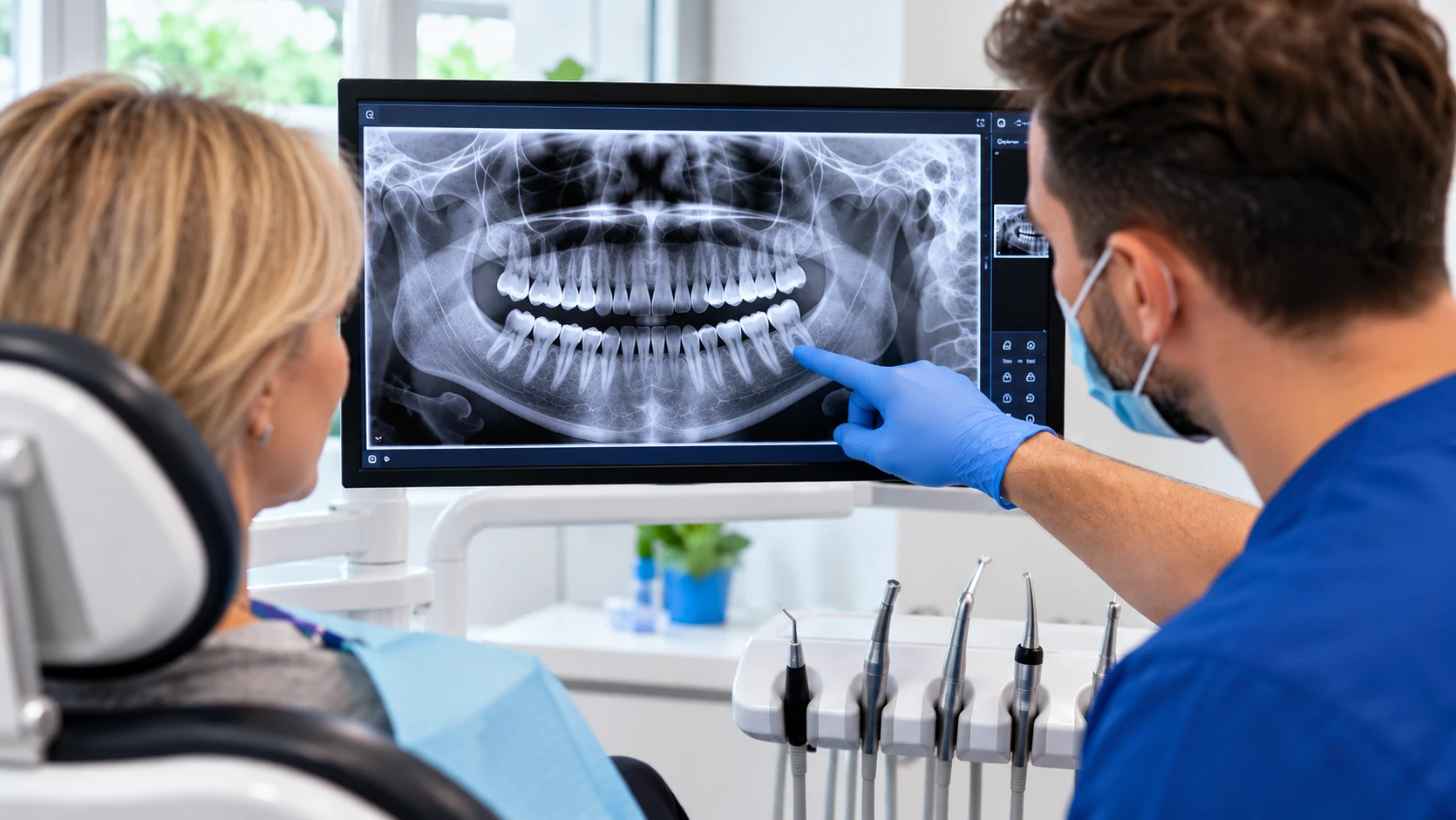
Photographs, an OPG, previous X-rays or a CBCT can help a clinic prepare an initial view before you travel.
But treatment can change after:
- face-to-face examination
- updated X-rays or CBCT
- assessment of tooth mobility or gum disease
- review of bone volume
- discovery of decay or infection
- assessment of existing crowns, bridges or root-treated teeth
Ask the clinic to distinguish clearly between:
- what is already confirmed
- what is provisional
- what may change after examination
- what changes could affect the price
A lower initial figure is not useful if you do not understand what can be added later.
Compare the clinical package line by line
For implant or full-arch treatment, check whether the price includes:
- consultation and treatment planning
- OPG and CBCT where clinically required
- extractions
- bone grafting
- sinus grafting
- implants
- abutments or multi-unit components
- fixed or removable temporary teeth
- the final bridge or crowns
- titanium framework or other supporting components where relevant
- laboratory stages
- medication
- follow-up appointments
- the second treatment visit
- routine adjustments
Mark anything that is absent from the quote as not stated, not automatically included.
Ask exactly what “temporary teeth” means
This is one of the biggest sources of misunderstanding in overseas full-arch packages.
Ask:
- Will I leave the clinic with teeth?
- Are they fixed or removable?
- Are they connected to the implants?
- What material are they made from?
- Are they intended to last until my second visit?
- Are repairs or replacements included?
- What happens if they fracture after I return home?
A package saying “temporary teeth included” still needs detail.
Understand the final restoration
The final bridge may represent a large part of the overall treatment value.
Ask:
- what material is planned
- whether the bridge is monolithic or layered
- whether a titanium bar or framework is used
- how the bridge connects to the implants
- how colour and shape are approved
- whether try-in stages are included
- what happens if changes are needed before final fitting
Do not assume every package using the word “zirconia” describes the same restoration.
Plan the number of visits
Complex implant treatment may involve more than one trip.
Ask the clinic:
- how many visits are expected
- how long each stay should be
- what will happen on each visit
- the expected healing period between stages
- what happens if healing takes longer than expected
- whether travel dates should remain flexible until a clinical review
Do not let a cheap flight dictate a clinical timetable.
Build aftercare into the decision before you travel
Aftercare should be discussed before treatment starts.
Ask:
- who you contact after leaving Turkey
- whether urgent support is available outside clinic hours
- whether photographs or video calls are used for initial remote assessment
- which problems require an in-person return
- whether a UK or local dentist can obtain the implant system components used
- what clinical records you will receive
- how maintenance should be organised at home
If remedial treatment requires another trip, ask who pays for flights, accommodation and treatment.
Do not treat a guarantee as complete aftercare
A written guarantee can be useful, but the wording matters.
Check:
- what components are covered
- what exclusions apply
- how long different parts are covered
- whether maintenance visits are required
- whether smoking or other factors affect cover
- what happens if the treating dentist leaves the clinic
- whether travel costs are included
The word “lifetime” does not answer these questions.
Separate medical travel from ordinary holiday travel
UK government travel advice specifically warns that healthcare standards and available treatments can vary and recommends independent research before travelling for medical or dental treatment.
For UK travellers, GHIC and EHIC are not valid in Turkey.
You should therefore think separately about:
- ordinary travel insurance
- whether planned dental treatment is excluded from that policy
- cover for unexpected illness or medical treatment
- whether additional medical-tourism insurance is available or appropriate
- what happens if your stay needs to be extended
Check current FCDO travel advice and entry requirements before booking because these can change.
Medication deserves planning
If you take regular medication, tell the clinic during assessment.
Carry enough medication for the trip and check current rules for taking prescribed or controlled medicines into Turkey.
Do not stop or alter prescribed medication simply because dental treatment is planned unless the appropriate clinician has advised you to do so.
Keep your own treatment record
Before leaving the clinic, ask for copies of useful records such as:
- written treatment plan
- implant system and component details
- implant positions and sizes where recorded
- relevant X-rays or CBCT records
- medication instructions
- final invoice
- aftercare instructions
- guarantee or warranty wording
- emergency contact details
These can be valuable if another dentist needs to help you later.
What Dental Compass should help you compare
A useful comparison is not “Turkey versus the UK” as a single price number.
It is:
- dentist versus dentist
- treatment plan versus treatment plan
- temporary restoration versus temporary restoration
- final restoration versus final restoration
- included items versus exclusions
- aftercare versus aftercare
Turkey contains many different clinics, dentists, laboratories and treatment models. The country name alone does not tell you the quality or suitability of an individual treatment plan.
In simple terms
If you are planning dental treatment in Turkey, organise the decision in this order:
dentist → diagnosis → treatment plan → inclusions → aftercare → travel.
That keeps the clinical decision in front of the holiday package.